




One List Every Food Lover Needs in Azerbaijan
- 3706 read by
- 16.01.2026 15:16
Top 10 Azerbaijan Foods You Should Try: A Beginner's Tummy
Europe's easternmost end by the Caspian Sea, Azerbaijan is a country renowned worldwide for its delectable and rich cuisine.
Why is it rich?
Because this region also happens to be the westernmost end of Asia.
Why is it flavorsome?
Because it’s naturally blended for ages, being in the middle of two continents.
Is there anything fleshy on this topic on internet?
Unfortunately, none!
Therefore, I decided to write this listicle to show newcomers to the Land of Fire 10 savory Azerbaijan foods with their:
Mouth-watering pictures;
Ingredients;
And so on.
Let’s start.
#1. Levengi or Lavangi: Stuffed Fish or Chicken
Of Azerbaijan's national cuisine (especially in the Talysh region in the south), Levengi holds a special place.
It’s a savory and rich stuffed dish made from a combination of ingredients, generally cooked within chicken or fish.
In fact, the original meaning of the Talysh word "Levengi" is "stuffed" as well.
The most delicious Levengi is made from kutum (Caspian white fish), found nowhere on Earth except in the Caspian Sea.
It's prepared by filling walnut kernels, lavashana (a sour lavash-like thing made from sour fruits such as cornel, etc.), onion, salt, and black pepper as the main ingredients into the cleaned and gutted fish.
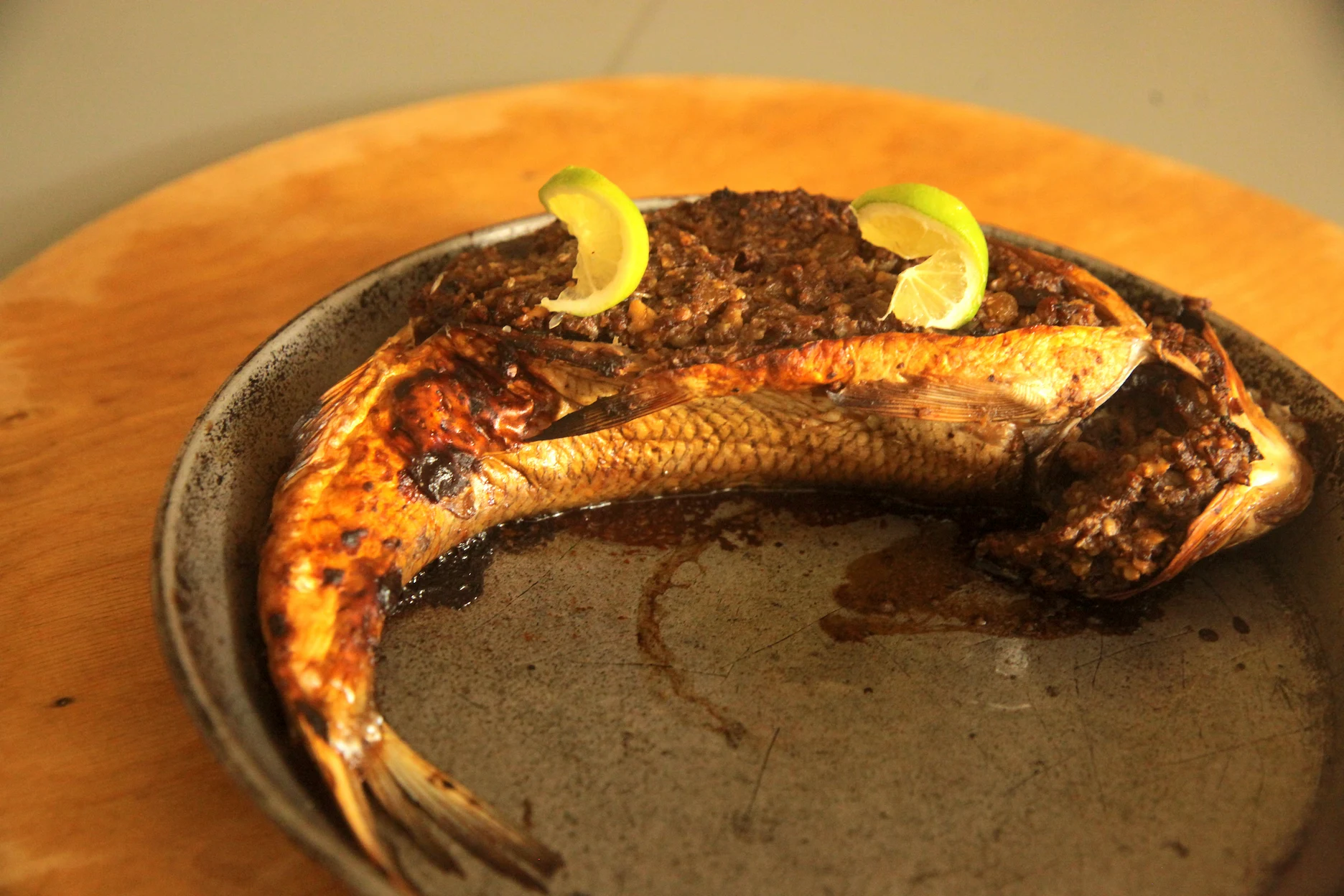
If the fish has roe inside, it's also added along with the walnuts and other ingredients.
This gives it more flavor.
Stuffed fish and its ingredients are then slow-cooked in a tandoor or oven, allowing all the flavors to blend and make the skin crispy.
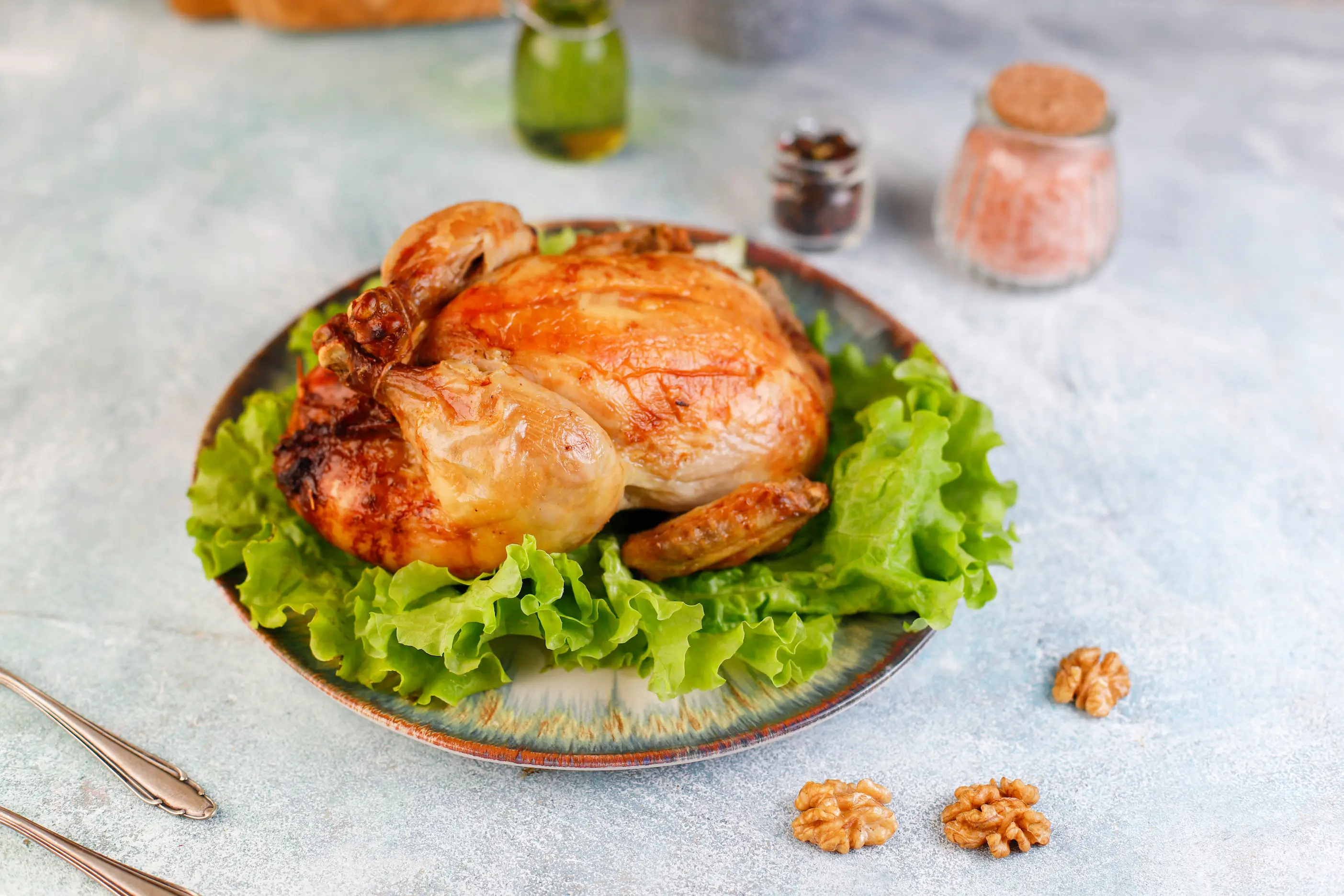
Chicken Levengi is cooked in the same way and is usually served with salad, along with lemon slices or plov / pilaf.
It is like rotisserie chicken but tastier (especially with walnuts) and juicier.
#2. Shah Plov / Pilaf: The King of Rice Dishes
So the story goes that Azerbaijan plov (also called "Aş" in Azeri) has over 200 variations.
For example, in the west, Sabzi Qovurma Plov is popular;
In the east, Sadri Plov (with saffron);
In the south, Shuyud Plov (with dill);
And in the north, Cighirtma Plov (chicken with mixed eggs, served with its bouillon on top of plov), Doshama Plov (a layered plov with special chestnut ingredients), and Balgabag Plov (pumpkin plov) are well known.
But amongst them, the one that is most popular nationwide is Shah Plov (King Plov).
As if the others were its lords.
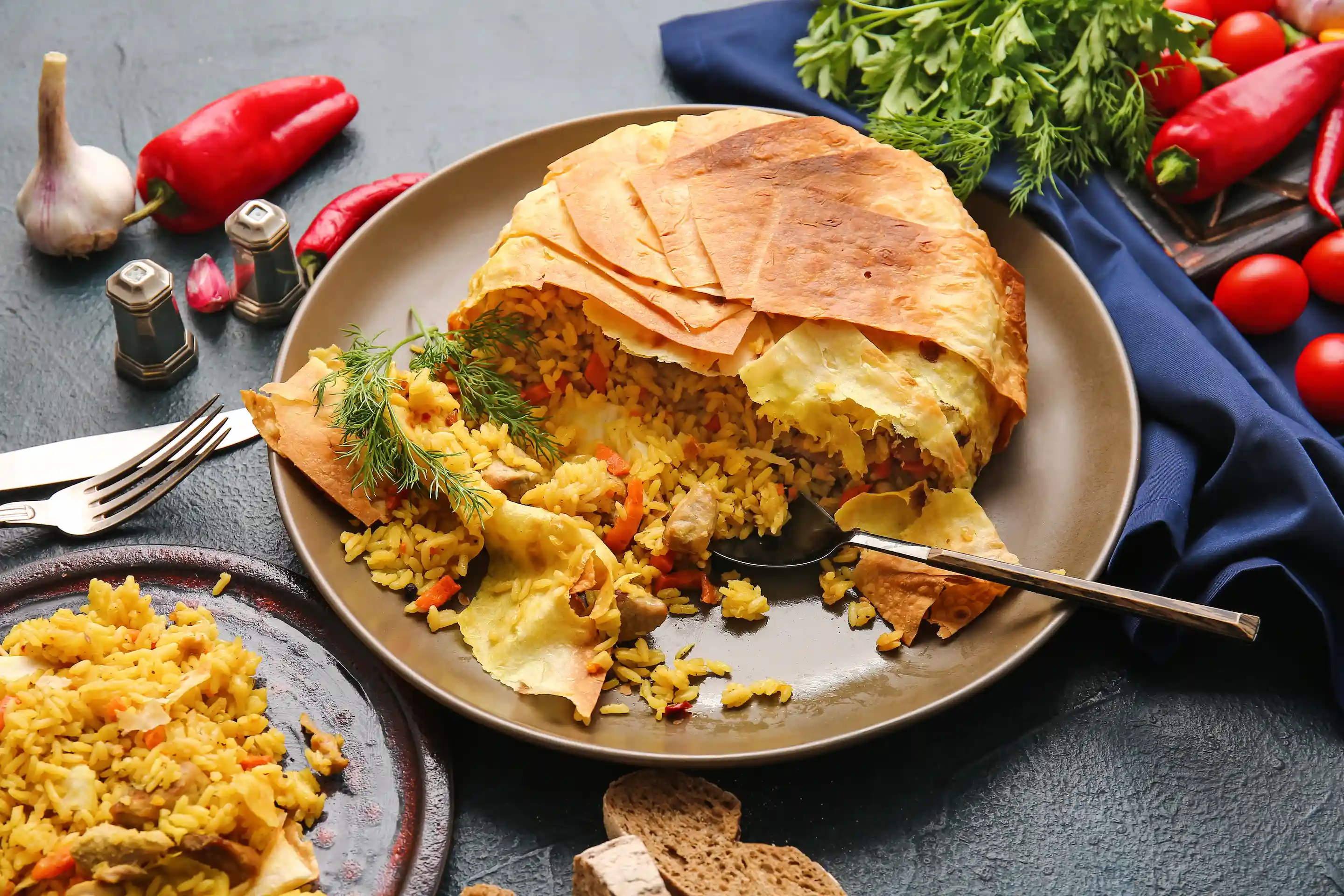
Shah Plov is cooked in a lavash-lined pot.
The lavash is moistened with clarified butter.
As a result, it forms a typical golden crust called "kazmag" or "qazmaq" in Azeri.
In addition to rice, it includes dried fruits (apricots, raisins, plums), nuts (chestnuts, almonds), and tender meat (lamb or chicken).
At first glance, you might think it's a pie.
But when you open the lavash, its fragrant aroma and steam make your appetite even stronger.
You can try it in all restaurants in the capital city and across the country.
#3. Piti: More Delicious When Eaten the Traditional Way
Another national food of Azerbaijan is Piti.
It is especially famous in northwestern Azerbaijan (Shaki), where it's been cooked for ages.
It's also said to be one of the most important dishes cooked for the khans at the Palace of Shaki Khans.
Derived from the name of the clay pot ("dopu" in Azeri) in which it is often cooked and eaten.
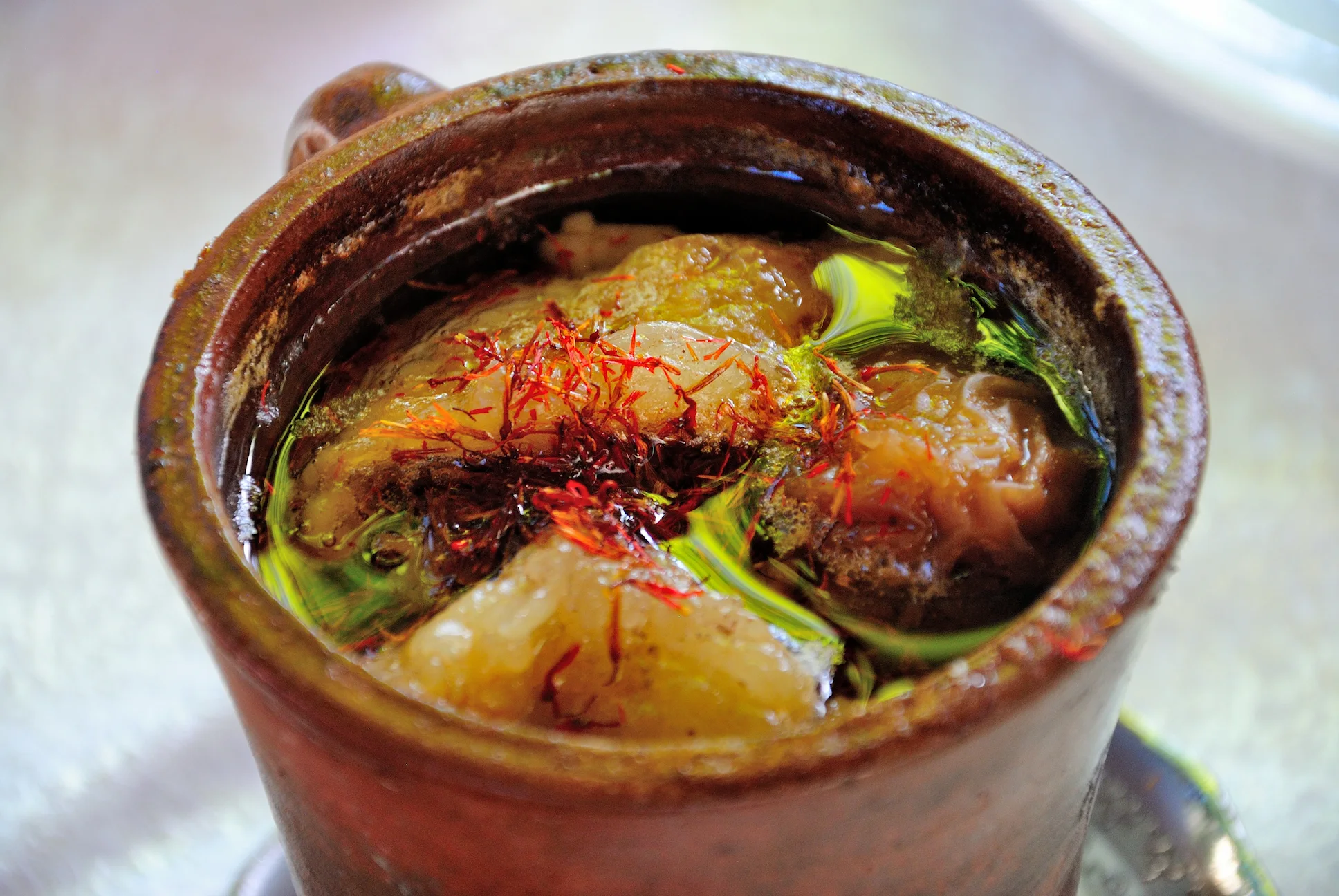
Lamb and chickpeas are two main ingredients that form the base of the dish.
Besides the main ingredients, saffron and spices add an authentic aroma.
And fat-tail sheep fat (Qoyun quyrughu) gives the dish its signature richness.
The trick, however, is in the way you eat the Piti.
Traditionally, then, there’re 2 steps to eating Piti:
Firstly, the broth is poured into a separate bowl and mixed with torn pieces of bread (sac bread) to soak up the flavors.
This is eaten as a soup before the main dish.
Then, the remaining meat, chickpeas, and potatoes are mashed together inside the clay pot using a wooden spoon (chomaq) or fork.
This creates a thick, flavorful paste that's eaten with fresh greens and pickles.
If you want to eat the best Piti, you must go to Shaki.
Finally, do not even dare to debate with Sheki chefs on how to eat Piti.
#4. Qutab / Gutab: Thin, Stuffed Flatbread
Qutab is one of the symbolic Azerbaijan dishes.
Generally, it is a thin, crescent-shaped dough stuffed with walnuts, cheese, meat (beef or camel), beef stomach, or garden vegetables.
A bit reminiscent of flatbread.
There’re dozens of varieties of this dish.
The most popular one, especially in Baku, is called Corat Qutabi.
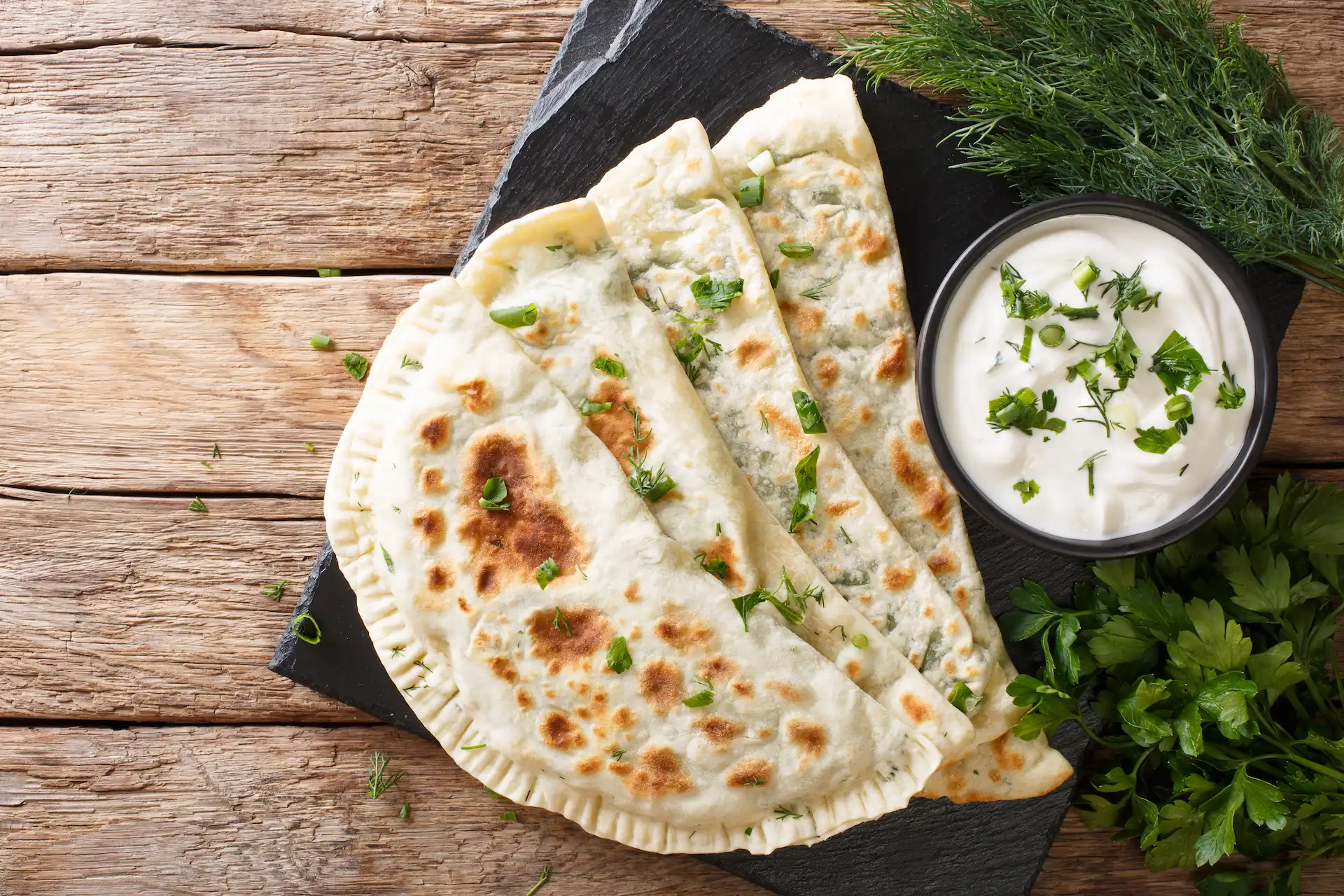
Much smaller than other variations, it is made with camel meat as the main ingredient.
But if you're in the northern part of Azerbaijan (for example, in Gabala), Walnut Qutab is the one you should try.
It’s a gourmet dish prepared according to a recipe particularly known among the older generations, cooked over a natural fire on a sac (triple-legged cookware).
And, unfortunately, the number of people who know this recipe can't be counted on a single hand.
#5. Azerbaijan Dolma: The True Dolma
Dolma is a very popular dish in the Caucasus region.
To be clear, this dish is popular not only in one region but also almost everywhere on Earth, like the Balkans, the Arab world, central Asia (Turkic lands), and even the US.
Each nation has added something to dolma from its own creativity / fantasy and the ingredients available to it.
But among Azerbaijan food, Dolma is not just food; figuratively speaking, it’s a national identity.
Without going into the tedium of the origin of this dish, Azerbaijan dolma is a pretext for a gastronomic tour in itself.
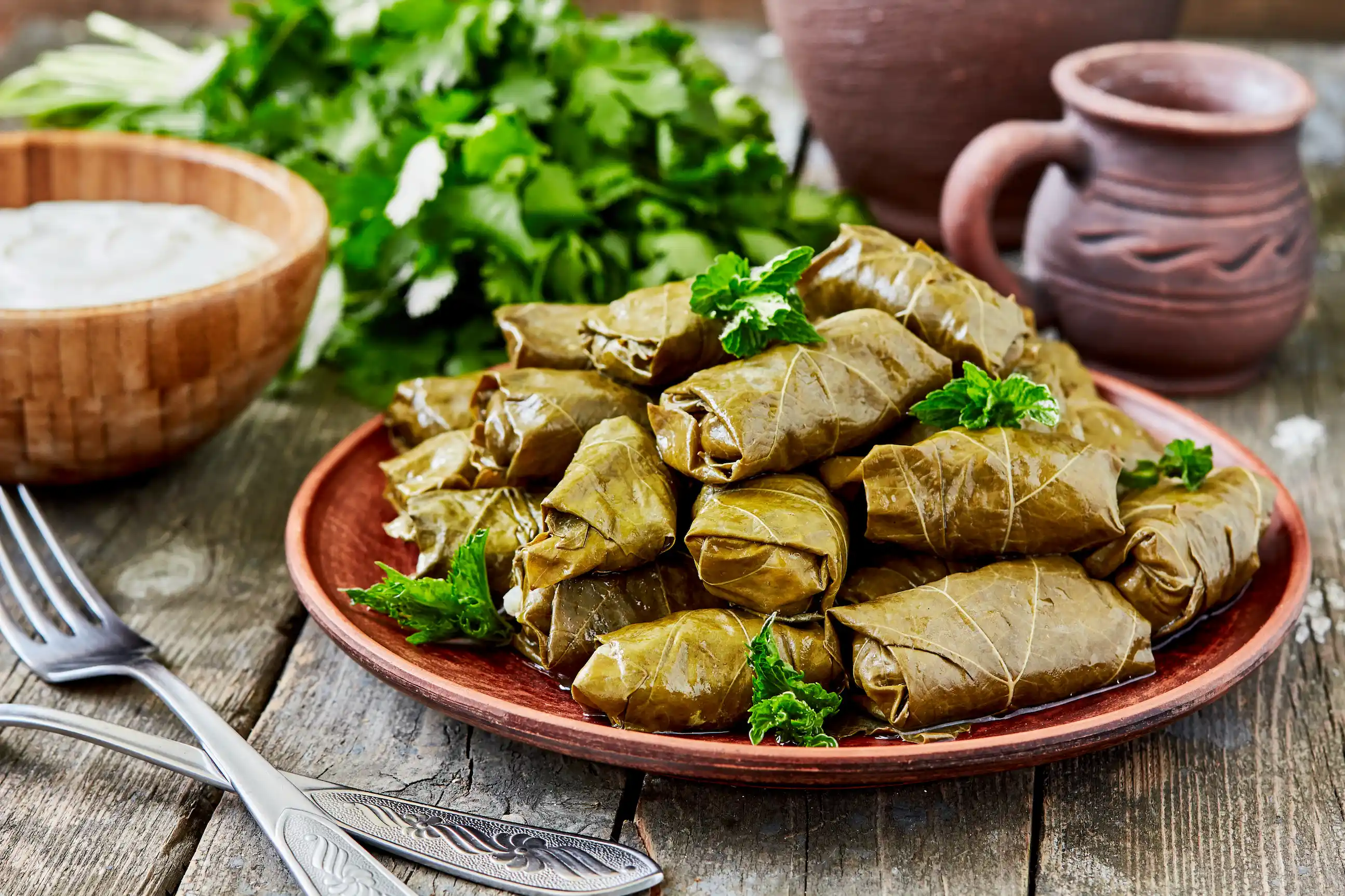
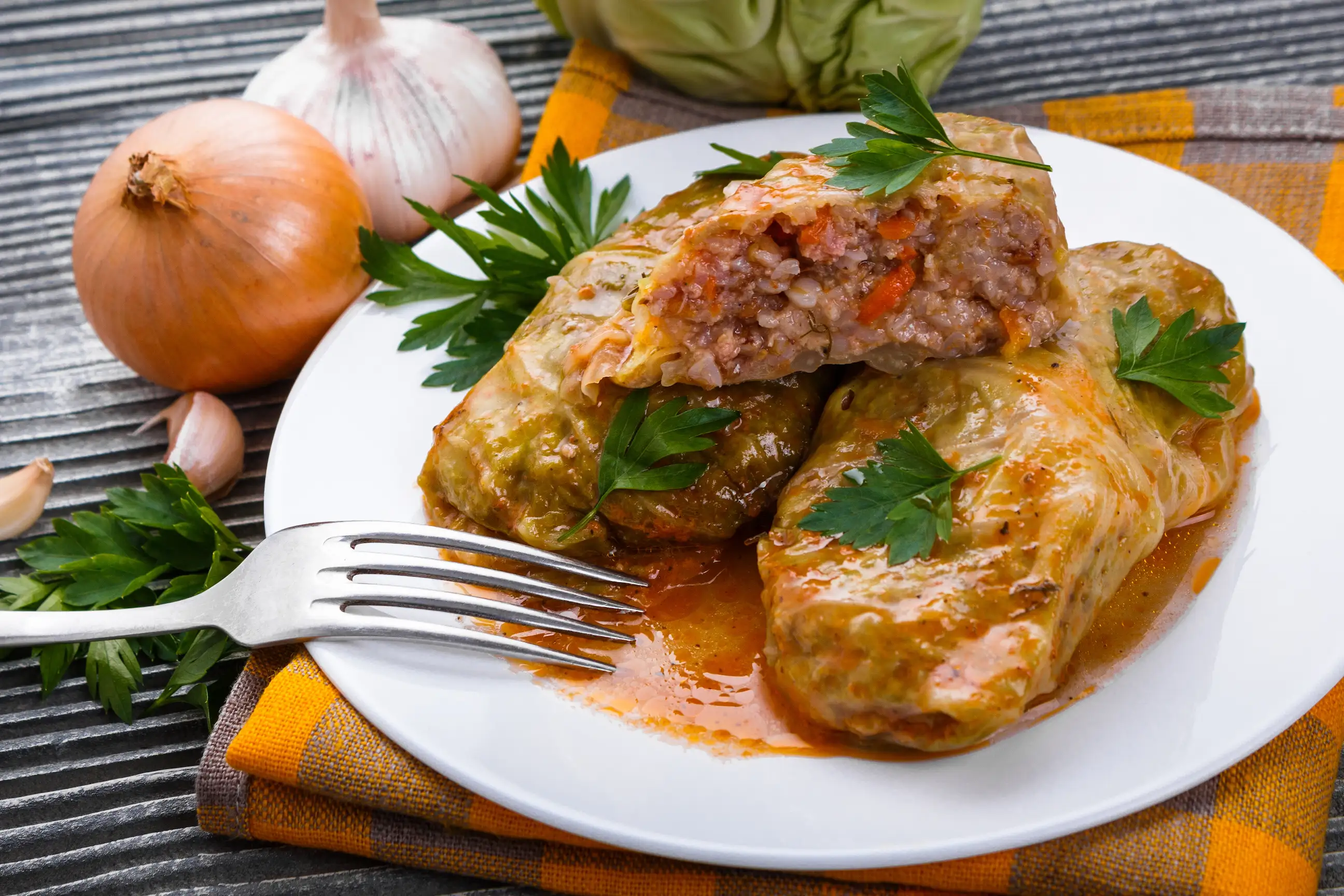
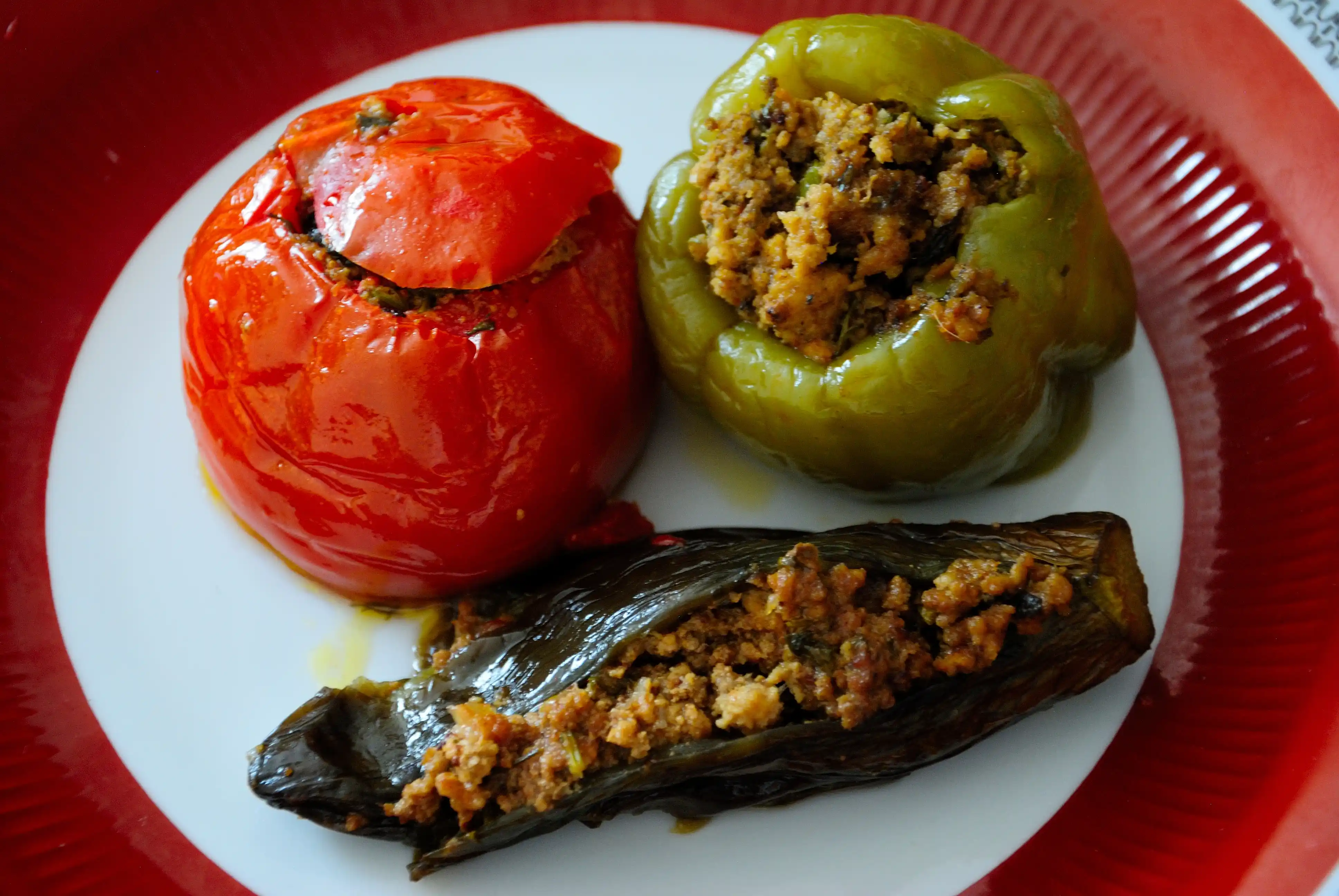
Simply, it's a dish with grape leaves (or cabbage and vegetables like tomatoes, etc.) stuffed with a mix of rice, herbs, and meat (usually lamb).
There’re 3 main variations of Dolma in Azerbaijan:
1. Grape Leaf Dolma (Yarpaq Dolması in Azeri)
2. Cabbage Leaf Dolma (Kələm Dolması in basic Azerbaijani)
3. And, Three Sisters Dolma (Üç Bacı Dolması)
Instead of vine or cabbage leaves, eggplant, pepper, and tomato are used to stuff.
There is also a vegetarian version of the Dolma called “Yalançı Dolma” (Fake Dolma) because it’s meatless.
My favorite.
#6. Buglama: A Steamed Dish
Name of this Azerbaijan national food, "Buglama", comes from the Azerbaijani word "buğ," which means steam.
The key part is that it's prepared by steaming the ingredients in their own juices without adding extra water.
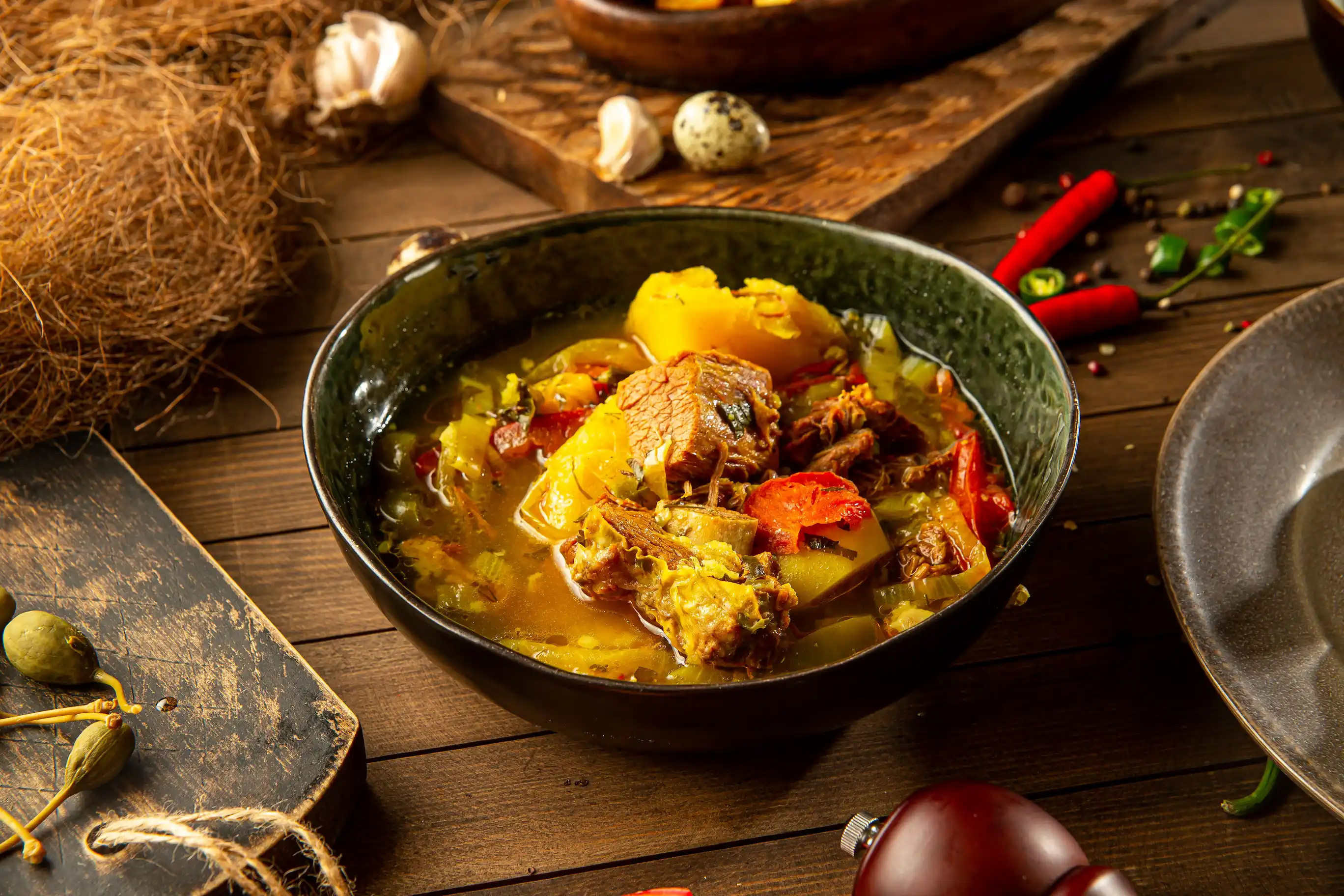
From among the dishes, Buglama, which can arguably be a contender for a 5-Michelin-star recipe, falls into multiple varieties, namely beef, fish, and lamb.
And usually the best thing that goes with it is Choban Salaty (Shepherd's Salad).
#7. Sadj / Saj: Cooked in a Large Cast-Iron
Sadj (Saciçi in Azeri) is one of the most delicious dishes of Azerbaijan cuisine.
The most delicate part of preparing this dish is using a Sadj (a universal shield-like cast-iron pan).
It's like a Korean deep stir-frying wok pan, but larger and shallower
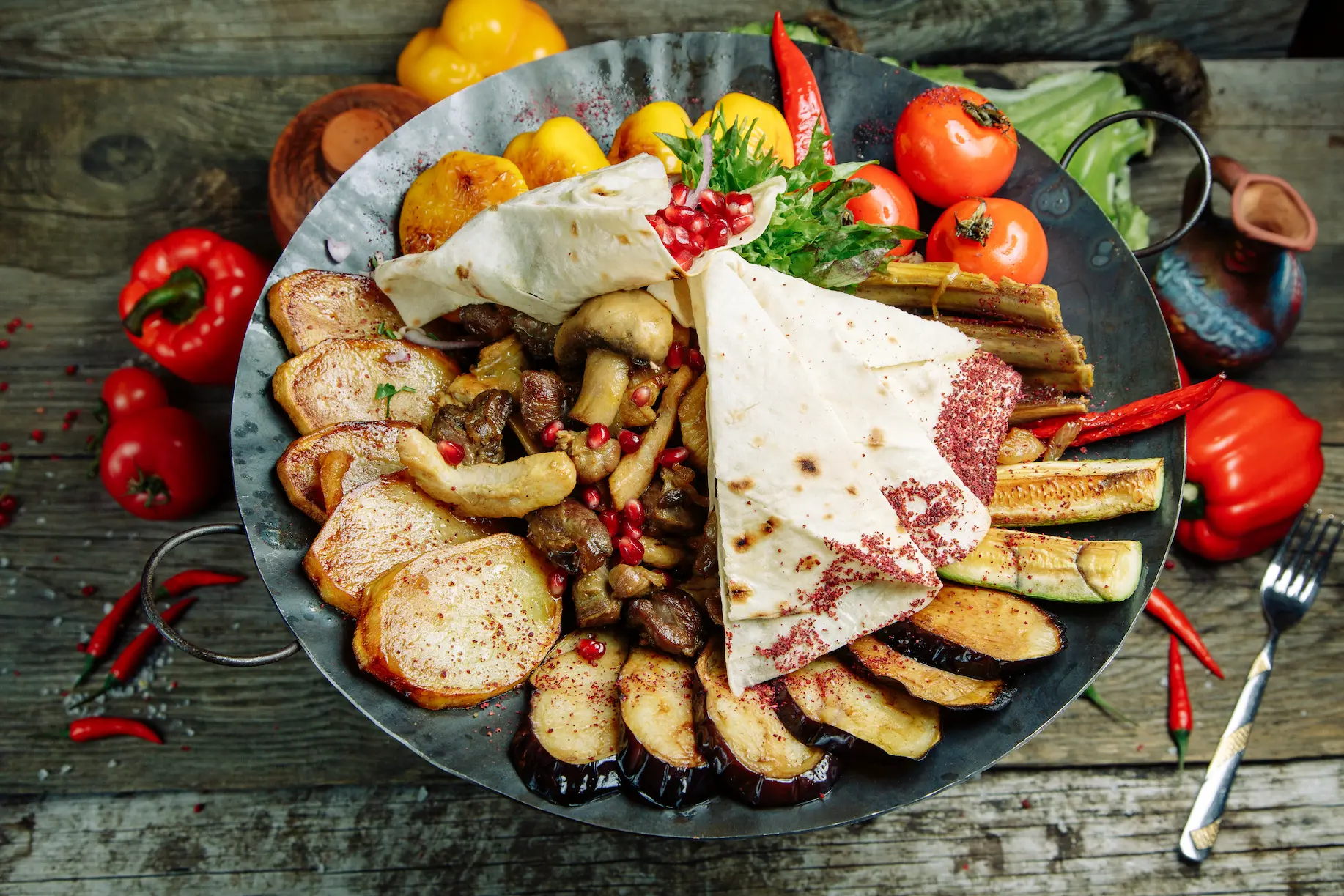
Rich flavors, tender meat (chicken or beef), and roasted vegetables are the must have details that make this dish.
Typically, when preparing Sadj, the chopped chicken or beef and vegetables are fried separately in oil, then mixed and served.
As for the service, Sadj must intrinsically be served hot.
So in some restaurants, it's served over hot coals.
In this way, you can take your food from it while it's still warm, before it gets cold.
#8. Dovga: Probiotic-Rich Azerbaijani Soup
As a soup-based food from Azerbaijan, Dovga is a versatile meal.
It is a traditional Azerbaijani food, a refreshing yogurt (qatıq in Azeri) soup that is often served cold as an appetizer.
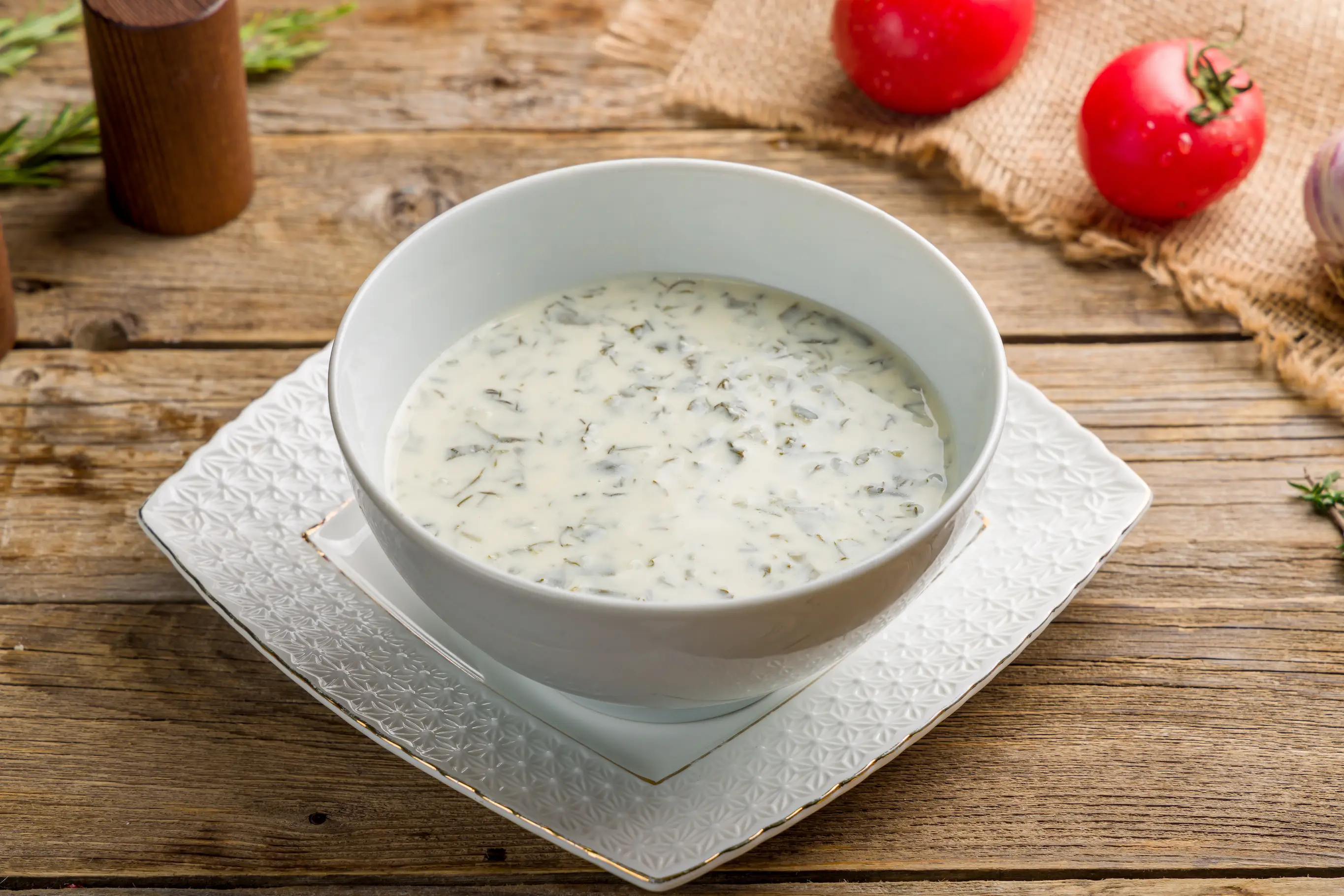
But in colder months, you can drink / eat it boiling hot as a healing, probiotic-rich soup.
The main ingredient is yogurt, followed by herbs, and sometimes rice, chickpeas, or meat.
In some regions of Azerbaijan, yogurt and cabbage are used as the main ingredients, and it's called “Kələm Dovğası” (Cabbage Dovga).
#9. Dushbara: Traditional Azeri Dumpling Soup
Another soup-based Azeri food, Dushbara, is a tasty and tummy-friendly dish that you must try.
At first blush, it seems like ravioli.
But it has broth.
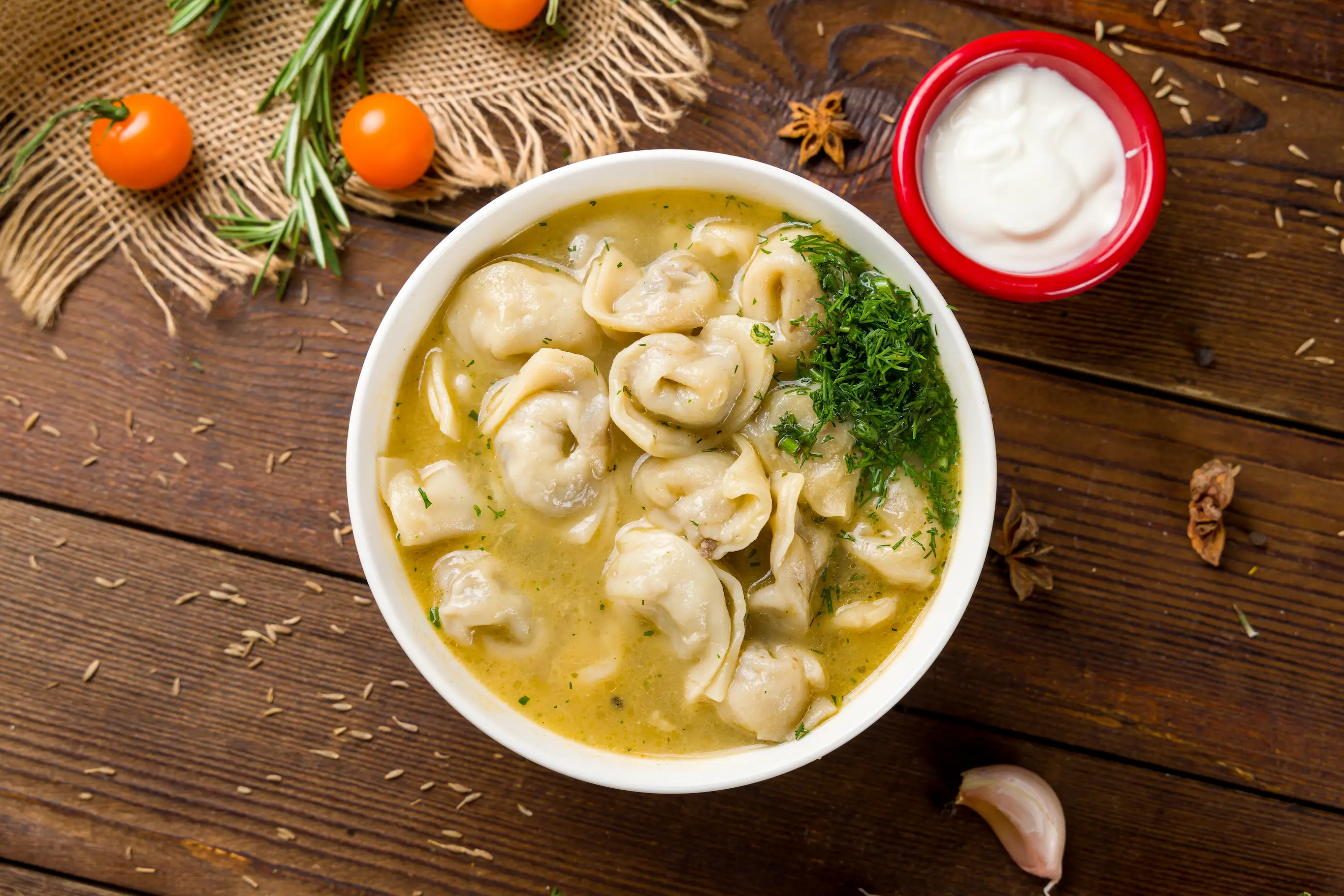
Dushbara soup consists of small dumplings typically filled with minced meat (usually lamb or beef), herbs, and onions.
And it's often served with a side of vinegar or garlic, which adds a tangy kick.
#10. Shekerbura and Paxlava: Inseparables of Azeri Sweets
At the end of the list are Shekerbura and Paxlava, two important sweets of Azerbaijani bakery.
Both desserts are known for their sweet, rich flavors and intricate preparation methods.
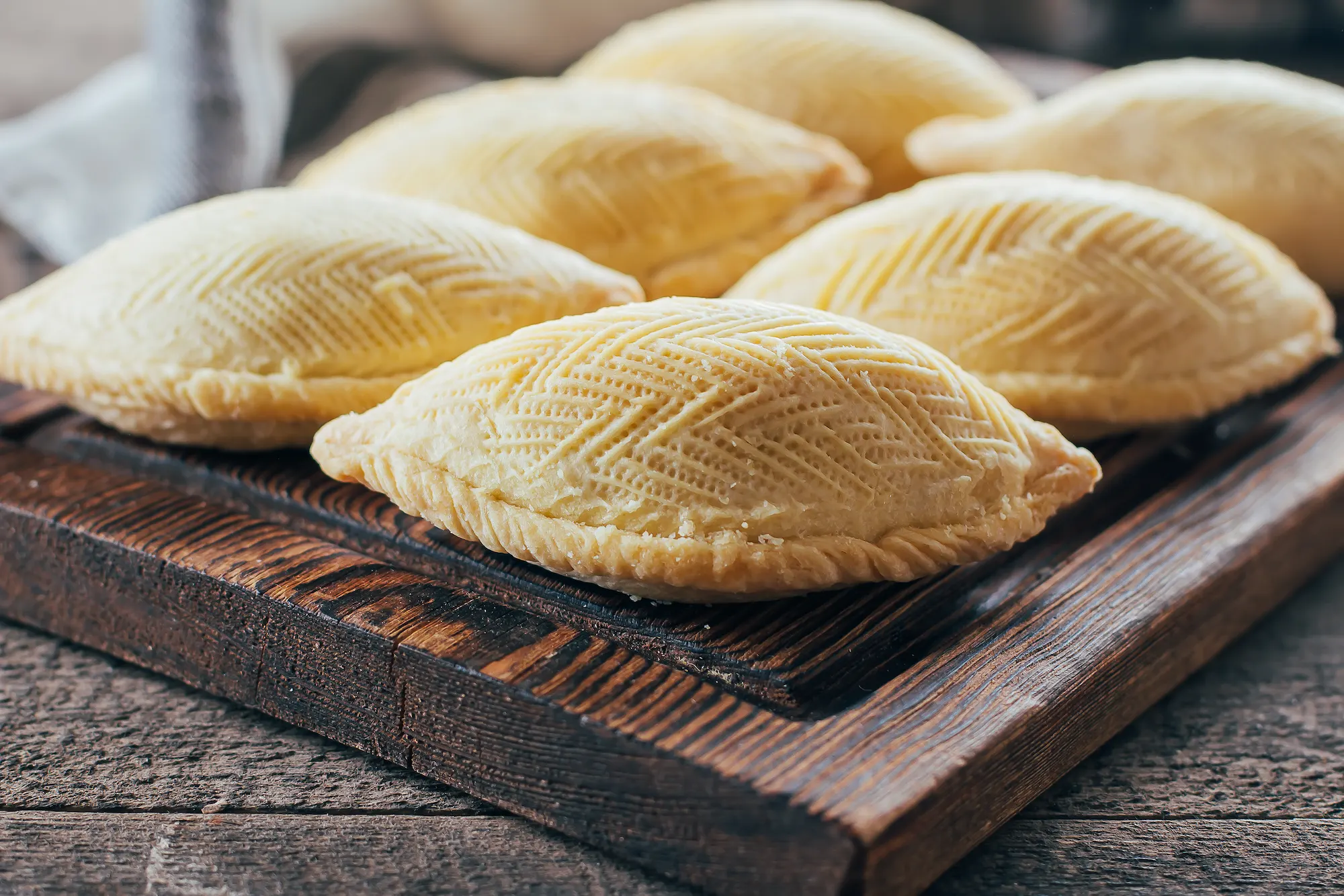
Shekerbura is a traditional Azerbaijani pastry filled with a mixture of sugar and nuts as the main ingredients.
Before it is placed in the oven, it is decorated with different patterns.
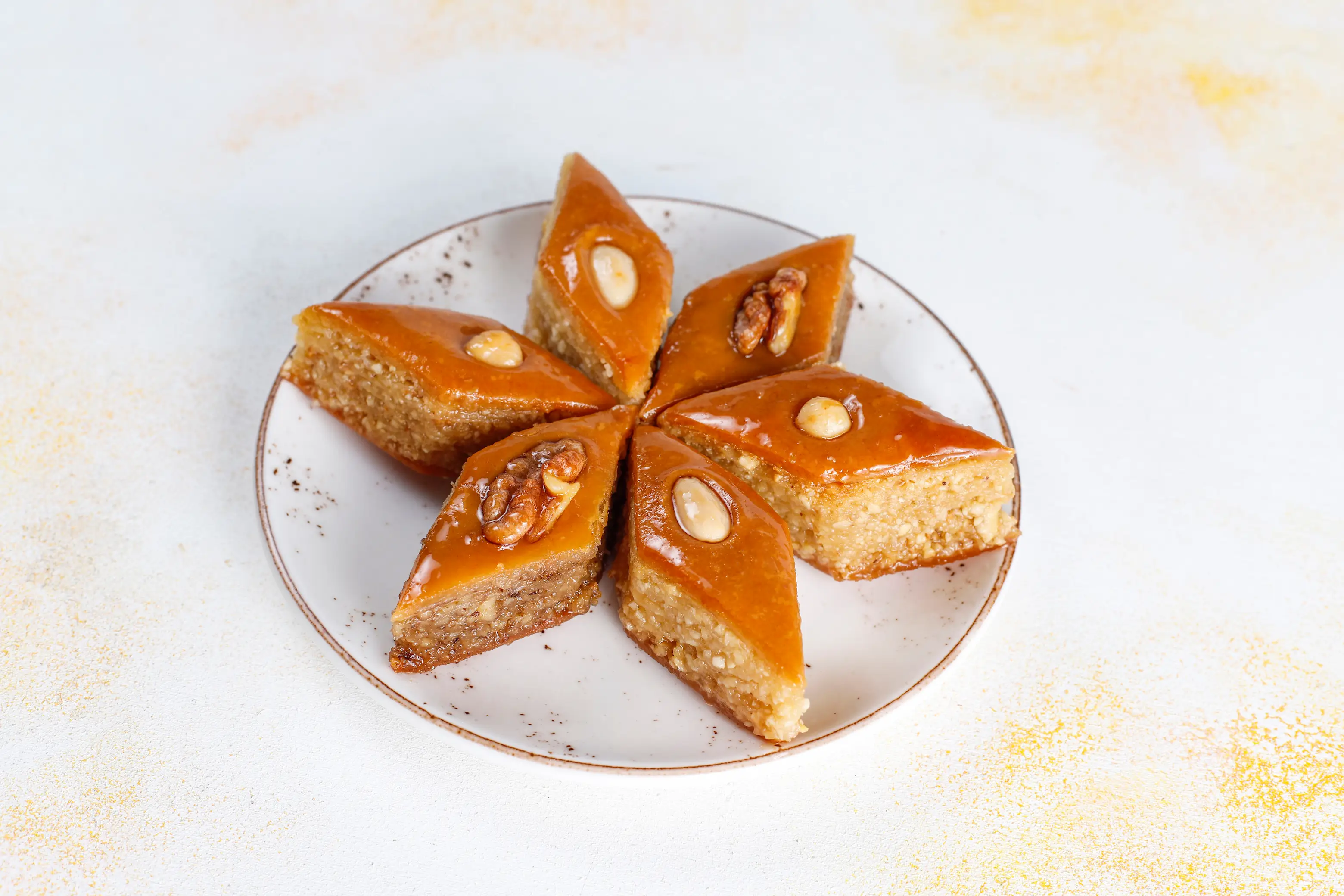
Azeri baklava, on the flip side, is a sweet pastry made of layers of filo dough filled with a mixture of crushed nuts, usually walnuts or pistachios.
Rhombus-shaped like paxlava, it is then sweetened with a special syrup that adds extra aroma to it.
These duos often become a trio, especially during the Novruz holiday (beginning on March 20), when Shorgoghal becomes involved.
And they’re 100% served with Azerbaijani tea.

Related Posts
The blog section of our website is a curated collection of informative and inspiring articles.


Leave a Comment