




This Mosque Feels Special the First Step In
- 1329 read by
- 12.01.2026 03:46
Bibi Heybat Mosque: Tomb of Prophet Muhammad's Granddaughter
Many visitors, particularly newcomers to Baku, always head straight for Nizami Street, the Old City, or the Boulevard.
But just a short ride from the city center lies a spiritual site that's older, deeper, and far more legendary.
I mean, the Bibi Heybat Mosque Azerbaijan, which stands proudly on the beautiful Baku Bay; despite all that’s happened to it over the past 800 years.
This Baku mosque is more than just a place of worship though.
Because people think the grave of the Prophet Muhammad’s granddaughter, Ukeyma Khanum, has been here for about a whopping 1,300 years.
And that makes it a sacred place for many, much like the Tomb of Noah in Nakhchivan, Azerbaijan.
Now, with no further ado, this compact article will walk you through:
The brief history of the Bibi Heybat Baku;
How it became known as the burial site of the Prophet’s grandchild;
Its tragic destruction under Soviet rule;
The rebirth after Azerbaijan’s independence and more.
And of course, I’ll finish it with useful tips (like entrance fees, dress code, timings, etc.) to help you plan your visit wisely.
So, if you're ready to know all you need to know about one of Baku’s most soul-stirring meiths, let’s begin.
Mosque of Bibi Heybat's History, Briefly
With its story behind it, the Bibi Heybat Mosque (Bibiheybet Mescidi in Azeri) in Baku can rival 90% of other attractions in Baku.
Maybe it can do so all over Azerbaijan.
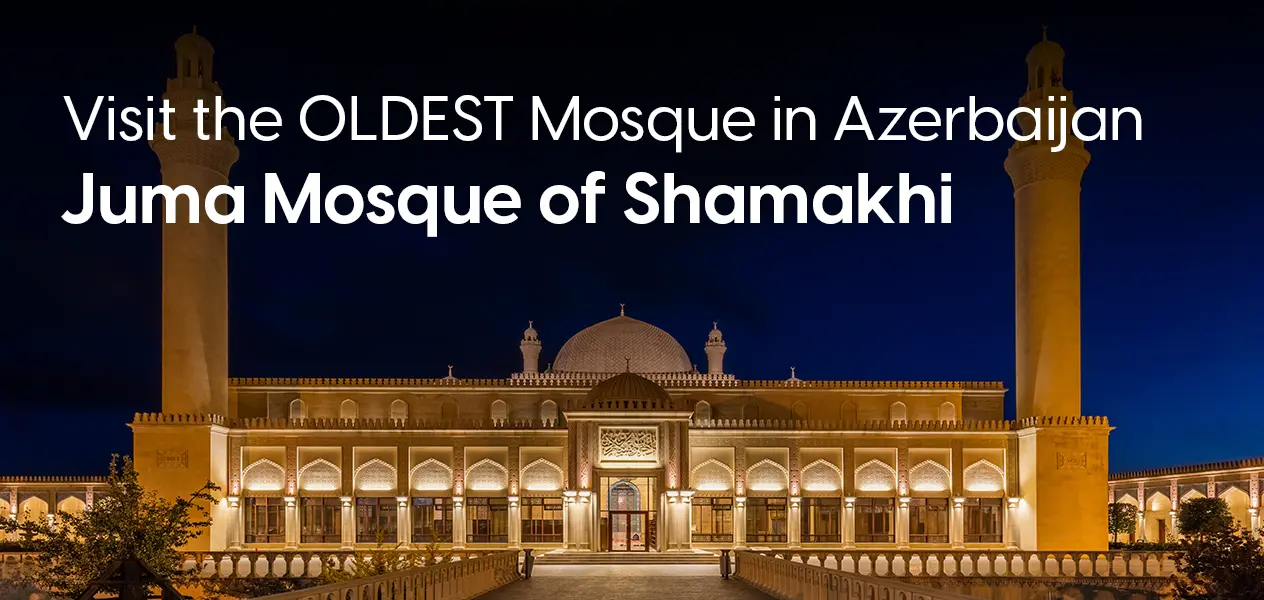
Interestingly, it’s neither the oldest, like the Juma Mosque Shamakhi, completed in 744.
Nor the largest, like the Heydar Mosque Baku, completed in 2014.
But there’s nothing that can compare to it as a legendary place in Baku for Muslims, especially Shiites.

A piece of writing on the south wall of the Bibi Heybat Masjid dates it to the rule of Farrukhzad II; the 28th ruler of the Shirvanshah dynasty.
More precisely, it’s written in Arabic as: “Mahmud ibn Saʿd did that”, who lived at the same time as Farrukhzad II in the 13th–14th centuries.
BTW, he was also the architect behind the Nardaran Fortress and the Molla Ahmad Mosque in Baku's Old City.
After the fall of the Shirvanshahs, the mosque changed hands among the Safavids, the Ottomans, and the Russian Empire.
For approximately a massive 400 years, with its dome’s proverbial blue beauty.
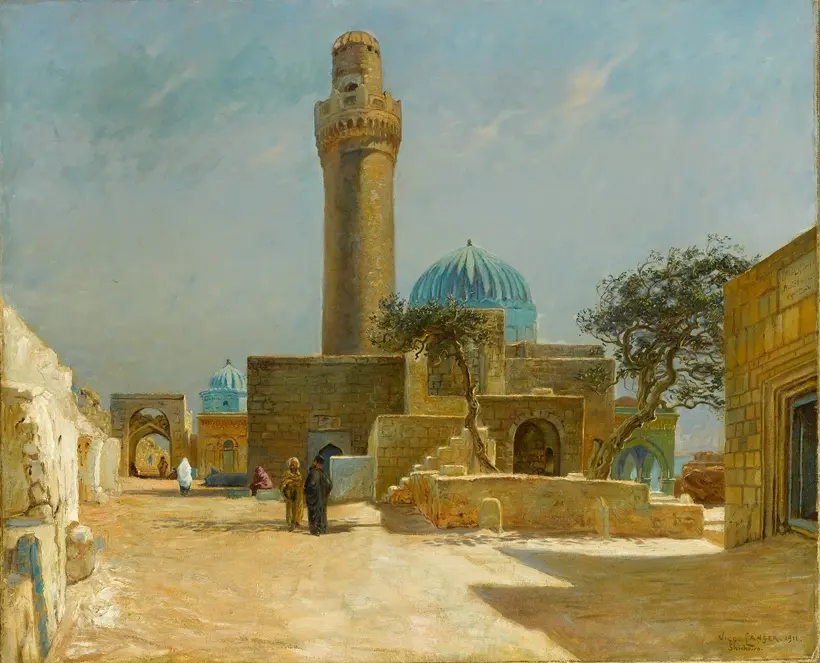
And finally, it - which had somehow survived until the 1930s by the skin of its teeth - was torn down when the Soviets arrived.
In the truest sense of the word: totally and brutally demolished.
I’ll get to the bottom of that destruction a bit later.
Now, I want to talk about something that’s a bit more pressing, which really counts. That is to say:
What is the real story? Where does the name “Bibi Heybat” come from?
What Relates Bibi-Heybat Mosque to the Prophet’s Grandchild
Not many people know this, but the Bibi Heybat Mosque Baku has a deep spiritual link to the Prophet Muhammad’s family.
It’s believed to be the burial site of Ukeyma Khanum, a female descendant of the Prophet, possibly his great-great-great granddaughter.
So she was one of the members of Ahl al-Bayt as well.
Note: In Islam, Muhammad’s family is known as Ahl al-Bayt, which means “people of the house”. In general, you can think of them as the descendants of Muhammad.
Some say she was the daughter of the seventh Shiite Imam, Musa al-Kazim.
Either way, her bloodline traces back to the Prophet himself.
This is how Ukeyma Khanum’s story (she lived in the 8th and 9th centuries) relates to the Bibi-Heybat Mosque:
During the early years of Islam, especially in the Umayyad and early Abbasid period, many members of the Prophet’s family were persecuted.
Some of them were immediately put to death before managing to leave the peninsula.
However, several of them were able to flee the Arabian Peninsula and settle in distant places.
One of these places was the Caucasus region, including what is now Azerbaijan.
Interestingly, Azerbaijan has always been a safe place for those fleeing persecution and seeking refuge.
For example, the Seven Sleepers also fled the Roman Emperor Decius and took refuge in Ashab e Kahf Cave in Nakhchivan.
According to local belief, Ukeyma Khanum was among those who escaped the Abbasid borders during that time and came to Baku.
And she passed away here in Baku, buried where the Bibiheybat Mosque was constructed in the 13th century.
That’s why people don’t just see this mosque as a prayer hall or a tourist stop.
Where Does the Name “Bibi Heybat” Come From?
The name “Bibi Heybat” might sound poetic and, at the same time, quite strange, but it actually comes from a real person.
It’s not only unclear to foreigners who don’t know the Azeri language; believe me, even locals might be confused by this basic Azerbaijani phrase.
“Bibi” means “lady” or “honored woman” in Persian (also in azeri it means “aunt”). From there, I reckon you’ve figured out whom I’m talking about.
On the flip side, “Heybat” was believed to be a nickname or title linked to Ukeyma Khanum.
As mentioned earlier, she was a descendant of the Prophet Muhammad.
Locals started calling her Bibi Heybat out of deep respect and affection.
She was seen as a spiritual figure - kind, wise, and brave during her exile in Baku.
So, when she passed away and was buried there, people remembered the place by her name.
This naming tradition is not uncommon though.
For example, the Shah Abbas Mosque in Ganja was named after a ruler, Abbas I.
So every time someone says “Bibi Heybat”, they’re not just naming a mosque.
They’re honoring a woman, a story, and a legacy that refused to be erased.
A Few Words on the Destruction of the Bibi Heybat Mosque
As I promised above, I now want to say a couple of words concisely on the destruction of that historic mosque.
Unfortunately, the Bibi Heybat Mosque you see today is not the original one.
The first structure was built in the 13th century and stood for over 700 years.
But in 1936, during Stalin’s rule, the Bolsheviks started an aggressive anti-religious campaign.
They demolished or closed countless religious sites, including Bibi-Heybat Masjid, Ashkenazi Synagogue of Baku and dozens of other Baku Azerbaijan Mosques.
No warning. No negotiation. Just dynamite, bulldozers, wrecking-ball cranes, and sledgehammers.
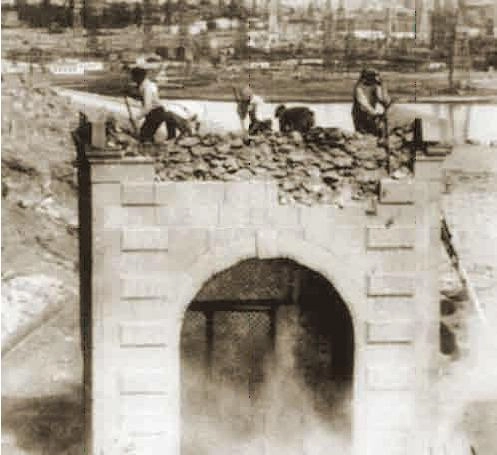
Locals were heartbroken.
Many people wept as they watched the mosque reduced to rubble.
Even the tomb of Ukeyma Khanum was not spared.
But people still kept visiting the ruins in secret.
They left flowers, whispered prayers, and refused to forget.
When Azerbaijan regained independence, one of the first things rebuilt was Bibiheybat.
A message that faith, once buried, can rise again. Isn't that the way it always happens?
A Few Words on the Reconstruction of the Bibi Heybat Mosque
After the USSR fell apart, Azerbaijan started working on taking back its heritage again.
And one of the first steps was rebuilding the Bibi Heybat Mosque.
So architects used old photos, drawings, and memories to bring it back.
Reconstruction officially began in 1994 under the order of President Heydar Aliyev.
Eventually, the new mosque was completed and opened to the public after five years of hard work in 1999.
It was built directly on the original site, right above the tomb of Ukeyma Khanum.
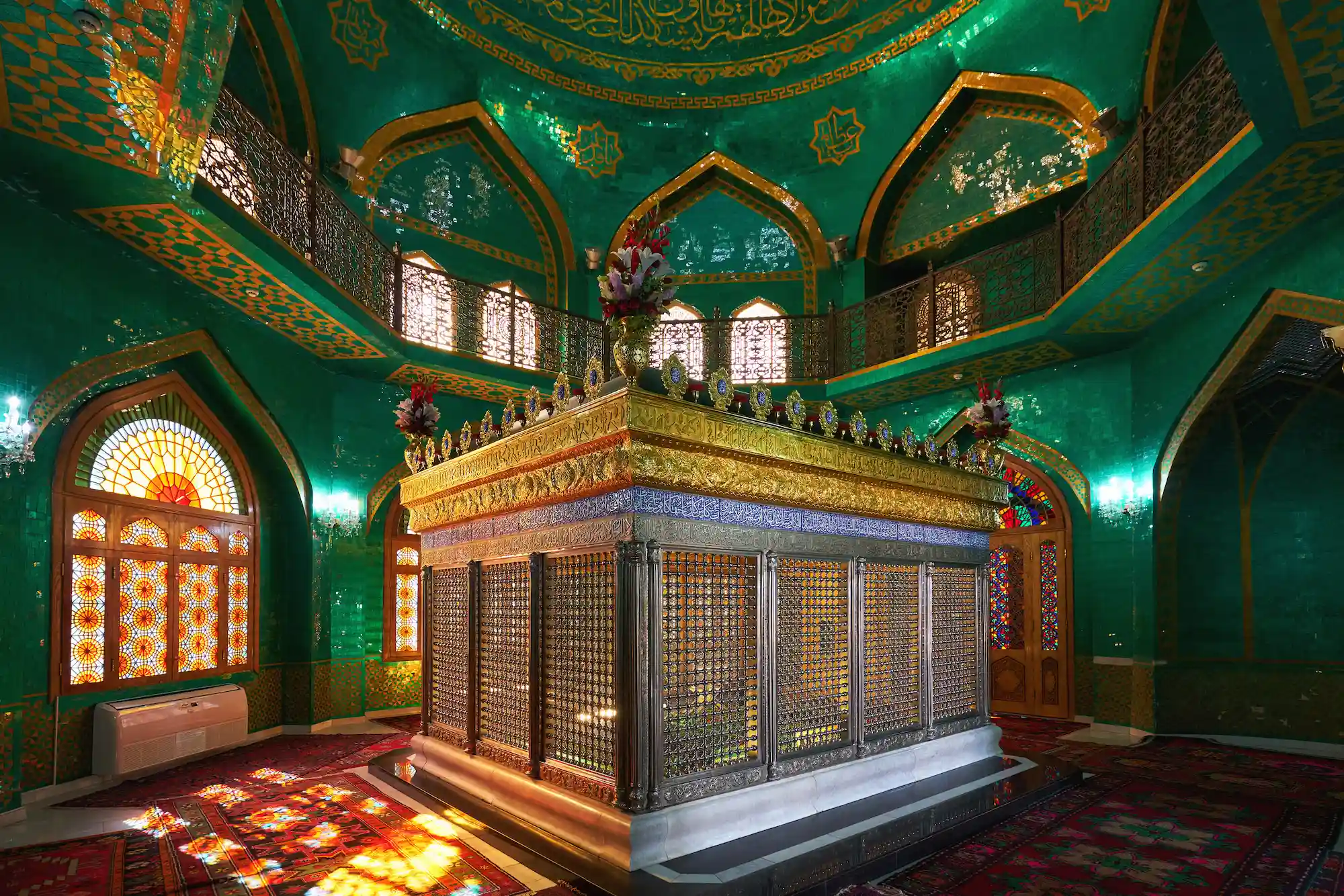
The details mattered a lot, because without it, the place wouldn’t feel the same or carry the emotional weight properly.
In the summer of 2008, the mosque underwent another reconstruction, and it eventually took on its current appearance, with its mind-blowing green dome on the interior.

The new version respects the original design but also includes modern additions like marble, stained glass, and gold-plated calligraphy.
Now it stands as one of the most visited mosques in Baku.
Useful Tips for Visitors to the Bibi Heybat Mosque
If you're planning to visit the Bibi Heybat Mosque, there’re a few things you should know beforehand.
First thing first, the mosque is open daily, usually from early morning until late evening.
There’re no strict entry times; There’re no strict entry rules.
Nonetheless, it’s best to visit between 9 AM and 7 PM.
Fridays can be more crowded due to Jummah prayers, so expect a larger crowd then.
Second of all, there’s no entrance fee, and yes, you’re welcome even if you’re not Muslim.
But dress modestly. It’s better for women to bring a scarf to cover their heads. Men, please avoid shorts as well. It’s not a rule, but it’s a sign of respect.
Third of all, the inner chamber, where Ukeyma Khanum’s tomb lies, is often visited quietly.
You’ll feel the atmosphere shift once you enter. It’s peaceful and deeply spiritual.
Also, there’s a large parking area right in front of the mosque.
It’s also that easy to get there by taxi or bus. You’ll also see the Bibi Heybat oil fields along the way, which are way more interesting.
By the way, you can also head to Baku’s best free public beach, Shikh Beach, before or after your Bibi Heybat Mosque itinerary. This is just for summer, though. Otherwise, it wouldn’t make sense.
That’s all.
Have a perfect tour!
Need help planning your Baku Tour? For online reservations, reach out to us at this number » +994 992 72 22 27.

Related Posts
The blog section of our website is a curated collection of informative and inspiring articles.





Leave a Comment